How to start running for beginners: The top tips you need to know
Let’s kick off with the essentials: the very first thing any beginner runner should focus on is grabbing a solid pair of running shoes. Don’t worry about the rest just yet – those moisture-wicking running clothes and other running goodies can wait for now (and we’ll talk more about those later.)
Choosing the right pair of running shoes for beginner runners
The best running shoes for you check all your boxes—one that feels comfortable and provides support and stability so you can run without discomfort and dodge injury.
The quickest way to find the best running shoe that fits you is to visit your neighborhood running store for a treadmill running gait analysis. (And you might even find some of the best running accessories there too.)
You’ll lace up a pair of running shoes and hop on the treadmill for a minute or two. While you’re busy working up a sweat, the experts will record your gait to analyze and reveal the best running shoe for you.
MY GO-TO PAIR OF RUNNING SHOES
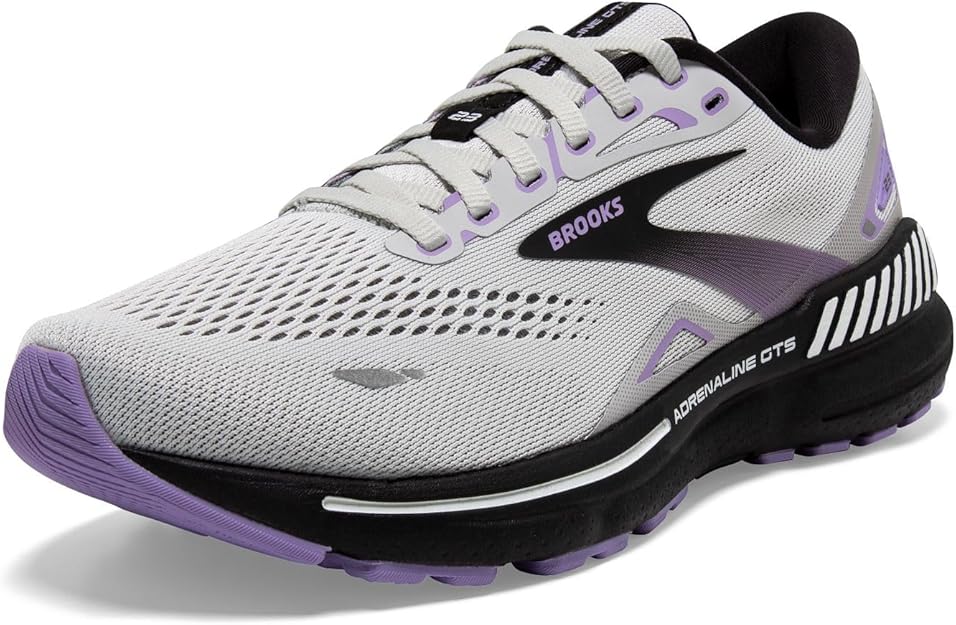
I stuck with Brooks Adrenaline GTS as a new runner for years. Wondering why? Well, for starters, they (along with my favorite running socks) kept blisters away, and these shoes struck a perfect balance between cushioning and support.

Now, let’s dive into a few more fit tips to guarantee your shoes fit just right:
When shopping for your running shoes, time it right – head to the store in the afternoon when your feet are at their largest.
Make sure there’s a thumb’s width of space between your big toe and the top of the shoe box. Your feet will thank you for this little wiggle room during your runs.
Take those shoes for a test run. Look out for any hints of discomfort, like rubbing, pinching, or squeezing because your running experience should be pain-free.
The fit around the heel area should be snug and secure for optimal stability. No slipping allowed; your feet should stay in perfect alignment during your stride.
Find the right balance of cushioning to match your personal comfort preferences. It’s all about making your run as comfy as can be.
When in doubt, trust your instincts. Each runner is unique, so choose the pair that feels like it was made just for you. Running shoes are also a personal preference, and your running shoes should be the perfect fit for all your running adventures.
The Newsletter
Real running advice for real life
Every two weeks. No fluff.
The perfect running clothes for new runners
Breathable, moisture-wicking materials are your best friend on the run. You’ve probably heard that you shouldn’t wear cotton when running, but does that mean you should deck out in head-to-toe moisture-wicking running clothes?
In a word? Yes.
Moisture-wicking gear uses sweat-wicking fabrics such as polyester, nylon, and wool to leave you dry yet cool throughout your entire run.
It’s not only the fabric fibers that keep you comfortable on the run. It’s also the way the threads are woven together, which allows moisture to move through the fabric and away from your body to help your sweat evaporate and keep you cool.
Technical fabrics whisk away sweat and are breathable, which allows you to regulate your body temperature. And, their quick their quick-drying nature means you won’t be uncomfortable in damp clothing.
Moisture-wicking properties are vital for running clothes and even more so for running socks.
You’ll spend more money on running socks than your regular cotton ones, but it is worth it because it can help you avoid blisters. (If you want to reduce the chances of getting a blister even more, pair your running socks with anti-chafe cream.)
Running safety gear for new runners
ID Tags: Slip on an ID tag with your essential information–tuck in details like your emergency contact number and allergies so that First Responders are armed with the knowledge they need to assist.
Running safety lights: Whether they’re running headlights, handheld running lights, or waist lights, these running safety lights are all about amping up your visibility, ensuring you’re noticed by others.
Reflective accessories: Whether it’s reflective gear, such as reflective bands, or waterproof reflective jackets (men and women), these running accessories catch the gleam of vehicle headlights, ensuring you’re a beacon to drivers.
Personal alarms or pepper spray: These small yet mighty tools offer security and control, especially in unfamiliar or potentially risky situations. A personal alarm lets out a loud, attention-grabbing sound that can make anyone with ill intentions think twice while alerting those around you that something’s up.
Pepper spray – a non-lethal tool that’s like having your shield – provides you with a way to defend yourself if you ever find yourself in a dangerous situation.
Phone: Whether it’s a sudden injury, getting turned around, or facing a potentially unsafe situation, having your phone on you means you can easily call for help.
Running safety apps: Having a running safety app such as bSafe, ROADiD or Strava in your corner adds an extra layer of protection to your running routine. And these running safety apps offer features that can instantly alert your chosen contacts if you’re in distress.
What to eat and drink before your runs
Before a morning run
Start your day right by rehydrating! After a night’s rest, a glass of water will get you ready for the road.
If you’re dashing out for a quick 30-minute run, grab a small snack like an energy bar or a banana to fuel up.
A handheld water bottle or a hydration vest with an electrolyte-rich sports drink will keep you hydrated during those hot weather runs and longer runs. Want to avoid some gels? You’ll find out in this post on how to fuel your runs without using gels.
Before your afternoon or evening run
If you’re planning to run shortly after lunch, opt for easily digestible carbs to avoid stomach discomfort during your workout. A turkey sandwich on whole-grain bread or a kimbap (or gimbap)* will energize you without weighing you down. *Kimbap (gimbap) is a Korean rice roll with fillings like carrots, spinach, eggs, and cooked meat. It’s a tasty option that offers a balance of carbohydrates and proteins.
If it’s been a few hours since your last meal, have a light snack such as dried fruit or edamame about 30 minutes to an hour before your run to boost those energy levels.
After your run
Refuel your body with a snack that combines carbohydrates and protein to aid muscle recovery.
And finally, remember to rehydrate after your run! Coconut water will help replenish those electrolytes after a run. Not a fan of coconut water? These other recovery drinks for runners may suit your taste buds.
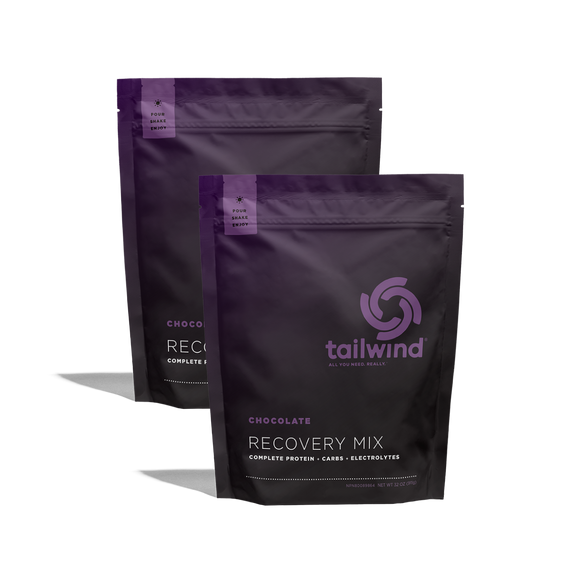
Tailwind Recovery Mix
Revitalize your post-workout recovery with Tailwind’s Recovery Mix – a delicious and hassle-free solution to kickstart your recovery process right after a ride or run.
The best running goal for new runners
The best running goal for beginner runners is often to build a consistent running habit. Starting with a goal to run regularly, such as three times a week, helps you build a strong running foundation.
I suggest you start with a run-walk running routine—that begins with a warmup routine and ends with a cooldown—because it’s one of the most effective ways you can build fitness, endurance, and strength without getting hurt.
With a run-walk routine, you’ll switch between running and walking during your workouts, which will give you a host of benefits:
Gradual progression: The beauty of this approach lies in its gentle introduction to running. Say goodbye to the common mistake of pushing yourself too hard too soon. The strategic integration of walking intervals allows you to extend your workout duration and steadily build your stamina.
Injury prevention: Run-walk routines show kindness to your joints and muscles, dramatically decreasing the odds of overuse injuries. With built-in recovery time during each walking phase, you’ll remain in peak physical shape while substantially reducing the risk of strains or sprains.
Enhanced endurance: The alternating pattern of running and walking acts as a fatigue-fighting strategy to help you maintain your energy levels effectively.
Once you’re a pro at your running routine, you can set more specific objectives like:
- Finishing a 5k
- Running continuously for 30 minutes
- Strength training twice a week
- Running 10 miles a week
For now, the key is to start with a goal that makes running a part of your life.
How to stay motivated with running
Staying motivated as a new runner can sometimes be a challenge, but it’s also incredibly rewarding. Here you’ll find a few tips to help you keep that motivation going:
Track your progress: Use a running app or journal to log your workouts. Seeing how much you’ve achieved is like an extra shot of motivation.
So celebrate those milestones—whether it’s going farther, getting faster, or staying consistent.
Set mini goals: While your big running goals are vital, sprinkle in some bite-sized objectives—those weekly or monthly achievements that keep you focused and motivated.
Reward yourself: Pat yourself on the back when you reach your goals. It could be something as simple as a sweet treat, a good book, or new running gear. Rewards make your hard work feel oh-so-worth-it.
Switch it up: Keep things exciting by finding new running trails. Try different routes, terrain, or surfaces because running should feel like an adventure, not a chore.
Sign up for a race: That friendly competition that comes from a running race and a sense of community can kick your motivation up a notch.
Run for a cause: Consider running for a cause you’re passionate about. Charity runs or events that support something you love can give you a powerful sense of purpose and motivation.
Tune into your body: Overexertion can zap your motivation, and it’s okay to take a break when you’re feeling exhausted or experiencing pain.
Celebrate small wins: There’s power in small victories—whether that’s running for an extra minute or choosing a lighter day when you’re not feeling your best—give yourself some kudos for doing what’s best for you.