→ The Barkley Marathons — The only race that welcomes you with a condolence letter. “Sorry you have to run this.”
→ Boston: An American Running Story — The world said, “You can’t run.” The runners and the city said, “Watch us.”
→ Breaking2 — Nobody can run that fast for that long. Nike: Let’s do it.
→ Desert Runners — 620 miles across four deserts. Carrying everything you need to survive. Totally voluntary.
→ Gabe – What do you do three weeks after they remove half your liver? You lace up.
Every algorithm thinks it knows you. True crime docs. Reality shows. Cooking competitions.
Do you want your usual comfort watch? Or something a little more uncomfortable like watching someone willingly suffer through 26.2 miles? Or 100.
Fun, right? Blisters, chafing, and miles of self-doubt.
Running documentaries hit differently when you’ve been crushed by that 10-foot wave of marathon overwhelm.
“What was I thinking?!”
Yes, these films are about running. And they’re also about what happens when we choose hard things on purpose.
Spending three hours on a Saturday morning run instead of sipping mimosas and eating eggs benedict.
Choosing to pay attention to your tight calves and pull back, even when your training plan says go.
And if you’re not sure when to do what, this 2-minute Daily Check-In helps you figure out when to push, pull-back, or something in-between.
And all that? You become someone new on the other side.
(Maybe that’s you, too.)
Affiliate Disclosure: I’m here to help you grow as a rider and runner. So to keep things running smoothly and the content free, I participate in the Amazon Services program and select affiliate networks. So, when you click on those affiliate links, I earn a small commission at no extra cost to you.
The Barkley Marathons: The Race That Eats Its Young
I think 26.2 miles is plenty. Let’s not overachieve here.
But some people wake up and think, “You know what sounds fun? 100 miles through Tennessee mountains with no GPS, no trail markers, and a whole lot of emotional damage.”
Hard is a major understatement. It’s really designed to break you. And yet, people still line up for this because it has all the classic signs of a great race:
- ✅ Entry process: Top secret. You’ve got to really want in.
- ✅ Race date: Announced only after you get accepted, so forget planning your vacation.
- ✅ Start time: One hour after someone blows a conch shell. When do they actually do that? Oh just, whenever.
That’s only the beginning. Runners have to find books hidden along the course as proof they made it, climb 120,000 feet of elevation, and run on almost no sleep. And no, that’s not all, but you’ll have to watch for more.
It’s really no surprise that some years, no one finishes. Other years? A handful.
My take? This wild ride is way better to watch than to run.
Watch now: The Barkley Marathons

Boston: An American Running Story (2017)
Ask most marathoners about their dream race and they’ll say Boston. Why? Because it’s the one of the few races that asks, “Are you even fast enough to register?”
Okay, that’s a dare that I won’t back down from. And, it’s the Boston most runners know.
But this doc isn’t that.
Boston: An American Running Story is about way more than fast times. It’s about people who keep running when everyone else would stop.
Like Kathrine Switzer, who kept running even when race officials tried to tackle her off the course. Or how Boston showed up Boston Strong after the 2013 marathon bombing.
And then Meb Keflezighi crosses the finish line as the first American man to win in 31 years. (I’m not crying, you’re crying.)
You know that saying about when the going gets tough? This doc is about the people who actually do it.
Watch now: Boston The Documentary
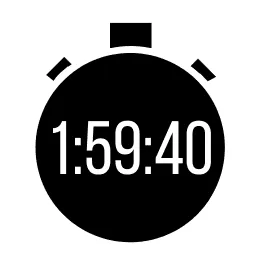
Breaking2: The Documentary
We live for those perfect race days: light legs, 60 degrees, no wind (unless it’s a tailwind), flat road (downhills preferred).
We cross our fingers and check weather apps every 2 minutes.
But Nike wasn’t going to wait around for perfection. So they manufactured it to answer one question: Can a human run a marathon in under 2 hours?
That’s a 4:34 min/ mile pace aka, the speed you hit on the treadmill for 3 seconds before panic-slapping the stop button.
So who could run this? Possibly 3 of the fastest marathoners: Lelisa Desisa, Zersenay Tadese, and Eliud Kipchoge.
When you’re already fast, you can’t shave off minutes, but seconds.
And the team found those seconds in:
- ✅ Shoe design: light, but with bounce
- ✅ Altitude: low, for max oxygen
- ✅ Wind resistance: none please
- ✅ Zero sharp turns: kills momentum
- ✅ Temperature: not too hot, not too cold
At this level, everything has to be perfect. Because perfect might get you under 2 hours.
So let’s see if they did.
Watch now: Breaking2
I won’t promise you’ll run sub-2 hours (that’s what Nike’s for), but I will share what works for the rest of us.
Real running advice for real life. Every two weeks, no fluff.

Desert Runners (2013)
Would you run 155 miles through the desert to see what you’re made of? How about four? I did the math…that’s 620 miles in a year.
It doesn’t matter that it’s so brutal that since 2008 only 78 people have actually finished it.
They have their reasons: some want adventure, some are grieving, and some want to train their minds.
But the desert doesn’t care about any of that. The conditions are the conditions: 122-degree heat, sand in all the wrong places, and carrying everything you need for 155 miles.
It’s self-doubt on full display, “Can I really do this?” in between dry heaves followed by, “I’ll crawl if I have to.”
Watch it to travel to the deserts without doing the extra work.
Watch now: Desert Runners
Gabe
Gabe Grunewald was the runner who smiled bravely through much of this film. Through races, PET scans that showed more tumors, and a cancer diagnosis with no cure.
But she didn’t hang up her spikes. Not even after surgery to remove half her liver and the tumor. Three weeks later, she laced up tighter.
Yes, cancer was still there, but it didn’t get to call the shots. Gabe kept running on her own terms until she couldn’t anymore
Gabe died in June 2019, just 32 years old.
But she left behind something that will outlive us all: the Brave Like Gabe Foundation. It funds research for rare cancers and reminds survivors that moving your body is medicine…with way better side effects.
Now see how you can be Brave Like Gabe: bravelikegabe.org
Watch now: Gabe
Well, if you’re sticking around…
Want more stories like this? I can’t promise you’ll become an ultramarathoner, but I will share what works for real life running.
Every two weeks, straight to your inbox, no fluff.
Sound good?