You traded spontaneous plans for scheduled miles, lazy Sunday mornings for alarm clocks, 20 weeks of becoming the friend/ partner/ parent who always had to check their training calendar first.
Now it’s taper time.
You’ve checked the weather app at least 7 times today, hoping it magically changes to perfect running weather.
And here you are, right before the big day.
But you’ve got questions: “Should I carbo-load? How much? What if I’m not doing it right? What do I eat on race morning? What if I hit the wall?”
So let’s talk what to eat and when. But with food you actually want to eat.
Because “bonking” is a thing, but it doesn’t have to be your thing.
Quick heads up! I’m sharing what I’ve learned from research and from my own experience, but this isn’t medical or nutrition advice. Definitely check in with a healthcare pro to figure out what’s right for you.
Carb-loading, but make it tasty and doable
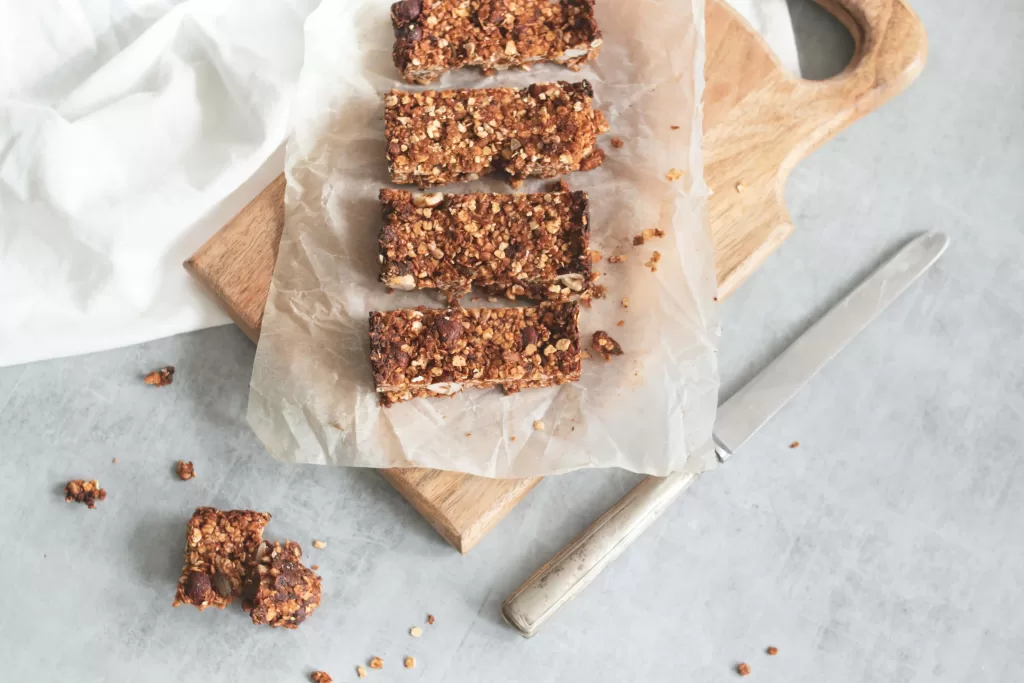
Carb-loading is an excuse to eat carbs all week…backed by science.
The science behind this pre-race carb life:
Your body breaks carbs down into glucose, your go-to energy fuel.
Any glucose you don’t use right away gets stashed in your muscles and liver as glycogen — which you’ll tap into on race day.
We carb-load to max out that stash.
Sure, you can use fat for energy, especially for slower runs, but it takes longer to access.
So glucose is your espresso shot—fast, sharp energy. Fat’s your pour-over that takes longer, but still keeps you going.
So when the pace picks up or you’re pushing through mile 20?
Carbs are the MVPs. Quick, efficient, and your muscles love ’em.
How do you know if you’re doing it right? (We’ve got to rewind a bit.)
You’ve got to test it. And not the night before your race, but before before.
Usually, your best shot to test fueling is on your longest runs, but even a midweek interval run can tell you if your go-to meal is actually a no-go.
Try this: Add an extra piece of toast, more noodles, another helping of your go-to carbs.
Then ask, how’d it go? Did you feel:
- Energized? Lock that meal in. It’s a keeper.
- Bloated or sluggish? Maybe not that combo again.
- Hit a wall? Let’s up the carbs.
- Smooth sailing? Nailed it. Don’t change a thing.
You’ve been winging it with your 10-milers. But 18 miles? That’s in marathon territory.
And you just want to know: how many carbs do you really need? And when?
I did the carb math so you don’t have to. Plus, how to test it all on your long runs.
Get it here.
Marathon carb-loading: How to eat a lot of carbs
Start loading up on carbs — bread, pasta, rice — 2–3 days before race day.
You’re aiming for 8–12g of carbs for every kilo you weigh.
So if you’re a 154 pound (or 70kg) runner, that’s about 550-830 grams of carbs a day.
And that looks like:
- 14-17 cups of cooked pasta or
- 13-16 cups of cooked rice or
- 2 loaves of bread or
- 21-26 bananas or
- 15-23 bottles of sports drinks
Which is…a lot.
That’s the goal, anyway.
I’ve missed the mark on this too. Eating that many carbs is way harder than it sounds.
But carb-loading doesn’t have to be perfect. Even eating more carbs than usual helps.
You’re just stacking the odds in your favor, one bite at a time.
Now I’ve got to warn you about carb-loading side effects.
Don’t panic…but you’re going to gain 2-4 pounds. Maybe more.
And that’s a good thing.
When you eat all those carbs, your body stores them as glycogen in your muscles. And that glycogen is clingy. For every gram you store, it drags along 3–4 grams of water.
So not only are you dealing with taper crazies, now you feel like a water balloon too.
Uncomfortable? Yes.
Working? Also yes.
Marathon race day breakfast: What to eat when you’re too nervous to eat on race day
Eat your usual breakfast 2-3 hours before your race…which can be hard when your race starts at 7 AM and you’re the type of person who considers 9 AM early.
Race day timing is everything…unless your race starts at 4 pm.
When you’re not racing at dawn, figuring out what and when to eat gets tricky.
What do you eat for lunch? What about dinner the night before? Miss your timing, and you’re either stuffed at the start or bonking at mile 18.
I broke down the whole timeline so you don’t bonk or bloat.
Grab the plan here.
Can’t eat anything? Let’s talk Plan B: liquid calories.
A sports drink, juice, a smoothie. Your body needs fuel in any form it’ll take.
Can’t eat that much? That’s okay too. Your carb-loading did most of the work anyway. Still, pack a little snack and a sports drink just in case.
And if you can eat: Go for something simple/ carb-y/ familiar. Oatmeal with honey, congee, steamed buns, or a bagel.
Just nothing new on race day.
What about caffeine? I’m not talking performance benefits or caffeine timing here. It’s just that coffee and caffeine make you feel more human. And on race day? You definitely want to feel human. You deserve to have that familiar, calming thing before, well…you know.
You’re not winging your training. Don’t wing the fueling either.
You’ve had 20 weeks of becoming the friend/ partner/ parent who always had to check their training calendar first.
So don’t let nutrition trip you up on race day.
I’ll walk you through it all—carb-loading, what to actually eat when you’re too nervous to eat, how to not dry heave at mile 20.
No guesswork. No last-minute Googling.
Want me to walk you through it?